
 Image 1 of 1
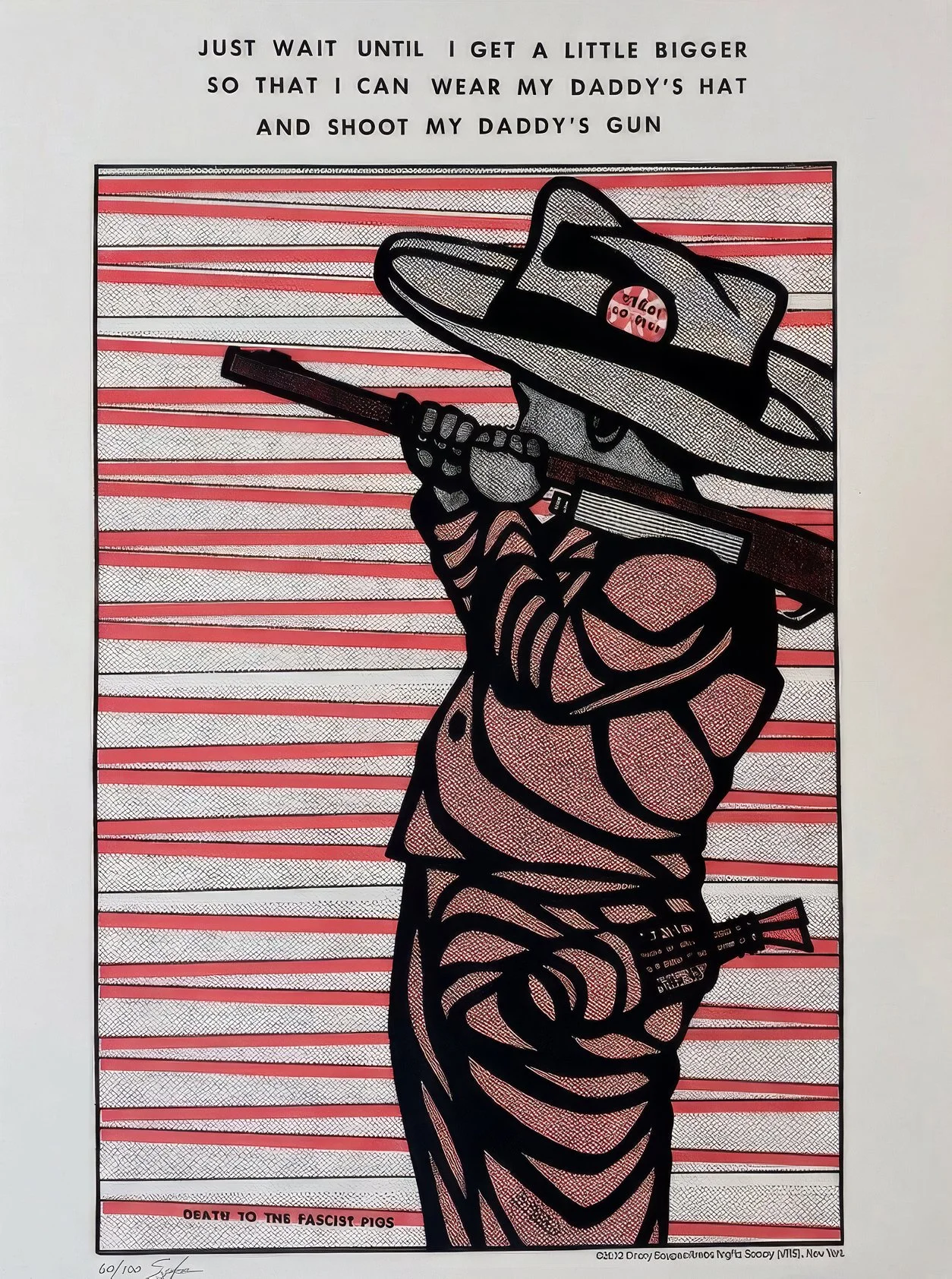
My Daddy’s Gun
18” x 24”
100# cover
Signed silkscreen
Edition number 60/100
Emory Douglas served as the Minister of Culture for the Black Panther Party from 1967 to 1980. In early 1967, he became involved with the Black Arts Movement at San Francisco State University as a set designer for the Black Communications Project. Douglas met Huey Newton and Bobby Seale, founders of the Black Panther Party, at a meeting regarding the organization’s security detail for Betty Shabazz’s upcoming visit to San Francisco. After this encounter, Douglas joined the Panthers and began going on police patrols in Oakland, where he met many of the community people who would later be the inspiration and subject for his work.
Douglas is most noted for his political drawings and cartoons in the Black Panther Newspaper. His provocative style visually articulated the injustices experienced by African Americans living in the inner city, the growing militancy and organization among urban Black youth to resist police violence, and the need for community-based social programs. In addition, Douglas’s use of rich colors, dark bold edging, and photos of everyday Black people to make collages created an authentic style that expressed the ideological platform of the Black Panthers and the heightened community consciousness of Black Power as a political concept.
My Daddy’s Gun
18” x 24”
100# cover
Signed silkscreen
Edition number 60/100
Emory Douglas served as the Minister of Culture for the Black Panther Party from 1967 to 1980. In early 1967, he became involved with the Black Arts Movement at San Francisco State University as a set designer for the Black Communications Project. Douglas met Huey Newton and Bobby Seale, founders of the Black Panther Party, at a meeting regarding the organization’s security detail for Betty Shabazz’s upcoming visit to San Francisco. After this encounter, Douglas joined the Panthers and began going on police patrols in Oakland, where he met many of the community people who would later be the inspiration and subject for his work.
Douglas is most noted for his political drawings and cartoons in the Black Panther Newspaper. His provocative style visually articulated the injustices experienced by African Americans living in the inner city, the growing militancy and organization among urban Black youth to resist police violence, and the need for community-based social programs. In addition, Douglas’s use of rich colors, dark bold edging, and photos of everyday Black people to make collages created an authentic style that expressed the ideological platform of the Black Panthers and the heightened community consciousness of Black Power as a political concept.